

Manuel Willfort investigates in his currently published master’s thesis at the Sigmund Freud University (SFU) Vienna: Can virtual reality exposure to nature significantly improve biopsychological parameters for relaxation?1
In his controlled and randomized study, a total of 48 test subjects (male, 19-60 years old) were recruited in two companies and divided into two groups of 24 people each: a test group (n=24) and a control group (n=24). The test group viewed the video for 30 minutes using VR glasses. a 360-degree film in which rock walls, a sandy beach, the sea and ships passing by could be seen in a bay and the sound of the sea could be heard. The control group sat still or looked up into the air for the same amount of time.1
The experimental group showed a significantly greater decline in skin conductance as a measure of stress — an effect that was more pronounced at higher baseline values. This points to an objective relaxation effect through VR, with more stressed individuals apparently benefiting more from the intervention. Subjective wellbeing — measured via self-assessment on a Visual Analogue Scale (VAS) — was also significantly improved in the experimental group, meaning the objective stress reduction was accompanied by an increase in subjective wellbeing.¹
1
Immersion is a meaningful indicator of how real participants perceived the VR exposure. The VR nature exposure in this study showed a very high degree of immersion: 100% of participants rated the 360-degree film as realistic, 86.7% felt physically present, and 83.3% experienced a sense of embodiment. High immersion — as found in the VR scenes developed by VR Coach GmbH, for example — is considered an important success factor for the effectiveness of VR interventions.¹˒²
The results confirm previous work that VR exposure to nature can induce a relaxation response and thus have health-promoting effects.3 In this work, acute stress induction was avoided and a period of 30 minutes was used. In such a setting, the benefits of VR are probably less pronounced than when acutely stressed test subjects are compared with a control group for a few minutes. The conditions as well as the carrying out of the measurements in two companies with a specially provided room are based on people’s normal everyday lives.
The author emphasizes that the rapid calming caused by VR nature exposure has implications for psychotherapeutic practice. Psychotherapists can expand their treatment repertoire with VR nature exposures, especially in sessions in which the focus is on stress management, reducing anxiety or promoting relaxation. Overall, the results of this study open up a wide range of possibilities for the application of virtual reality in psychotherapy.1
1. Willfort, Manuel „Entspannung mit Virtual-Reality-Naturexposition“, master’s thesis at the Sigmund Freud University Vienna, 2023.
2. VR Coach GmbH, https://vr-coach.at
3. Altenhofer M et al., „Virtual-Reality-Therapie: Anwendung in Klinischer Psychologie und Psychotherapie“, Springer Verlag Berlin, ISBN 978-3-662-63456-1, 2022.
The results demonstrate further applications of VR therapy in depression that go beyond classic exposure-based approaches.


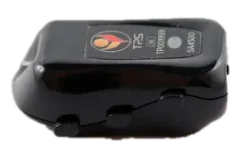
The TPS finger sensor can be comfortably attached to a finger using a stretch band. The patient downloads the free “eVu sens” app on their smartphone. The finger sensor is paired with the smartphone via Bluetooth and biofeedback data is transmitted to the app for later analysis.
The finger sensor is paired with the smartphone via Bluetooth and the biofeedback data is sent to the app and evaluated later.
No results found.
Our users consistently confirm the very high quality and realism of the 3D graphics. Unfortunately, this quality cannot be fully conveyed through simple images on the website.
The screenshots shown are intended only to illustrate and demonstrate the content.

Wir nehmen demnächst mit Ihnen Kontakt auf.
Ihr VR Coach-Team
We will be happy to get in touch with you soon!
Your VR Coach team
Would you also like to test our content for depressions, eating disorders and compulsions free of charge?


