VR therapy for eating disorders: target eating behavior and body image
The complement to classical cognitive behavioral therapy

Experience eating situations realistically in VR therapy
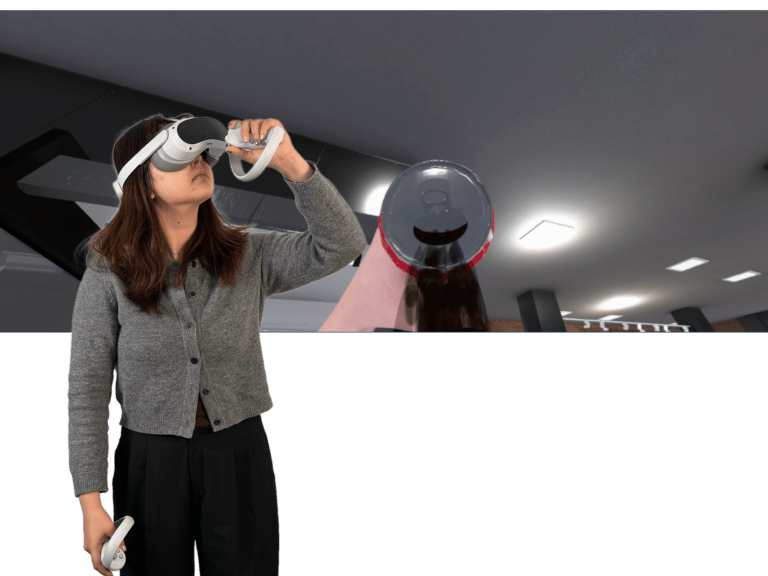
In the VR Coach smartsystem, patients are placed in an environment with different foods. These can be picked up, brought to the mouth, and actually eaten virtually. Bite and swallowing sounds occur, and the portion visibly changes.
Stressful eating situations can therefore be experienced without real food intake. It often becomes apparent that the expected reaction is weaker than anticipated or decreases again after a short time.
The approach always remains controllable and can be expanded step by step.


Use food in a targeted way
Depending on the specific issue, different foods can be selected:
- sweets such as cake or donuts
- high-calorie foods such as pizza, burgers, or fries
- meat and sausages at a grill
- neutral foods such as bread, cheese, fruit, and vegetables
- drinks such as soft drinks, energy drinks, coffee, or beer
This selection allows a gradual process — from less stressful to more challenging situations. Reactions can be observed and addressed therapeutically.
Address evaluations and eating impulses
Before eating, rules, evaluations, or withdrawal often occur. This phase becomes visible during the situation and can be discussed directly.
Depending on the therapeutic approach, strategies from impulse work can be integrated, for example based on the 3P principle (Pull – Pause – Push).


Making body image tangible
Patients can step on a scale and experience different weights. The mirror image adapts to the selected weight.
Often the perceived change differs significantly from what was expected beforehand. Imagination and perception can therefore be directly compared and reflected upon together.
Integration into the treatment of eating disorders
VR therapy for eating disorders is used as a complementary method — for example to prepare real eating situations, work on body image issues, or gradually approach stressful foods.
Applicable for anorexia nervosa, bulimia nervosa, and binge-eating disorder.

Scientific classification of VR therapy for eating disorders
Studies on the use of Virtual Reality in eating disorders particularly show effects on body image distortion and on the handling of eating situations.
Advantages of VR therapy for eating disorders
VR therapy enables a gradual approach to challenging eating situations in a controlled environment. Reactions can be directly observed and jointly reflected upon.
This supports both work on eating behavior and the exploration of body image and evaluation.
VR therapy is also used for phobias, obsessive-compulsive disorders, and depression.

Content and possible applications
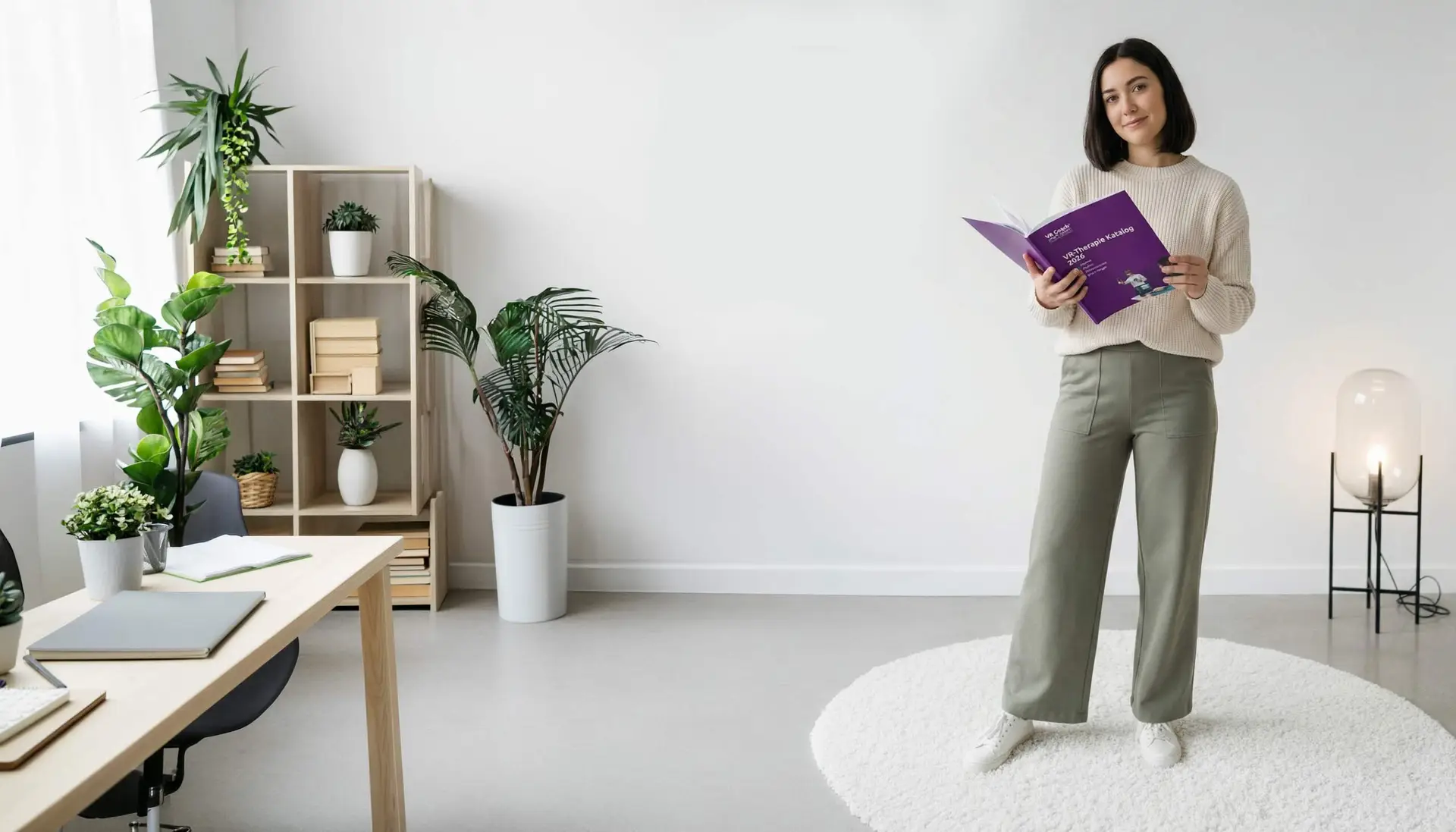
An overview of all scenarios and therapeutic applications can be found in the catalog. Many institutions first use it for orientation and then discuss together how it can be integrated into their treatment concept.
Order your catalog with price list now – without obligation
Inside you will learn:
- Which content the individual modules offer
- How you can test the smartsystem
- Which VR headsets are compatible
- All hardware and software prices
After submitting the form, we will send you the catalog and price list promptly by email.

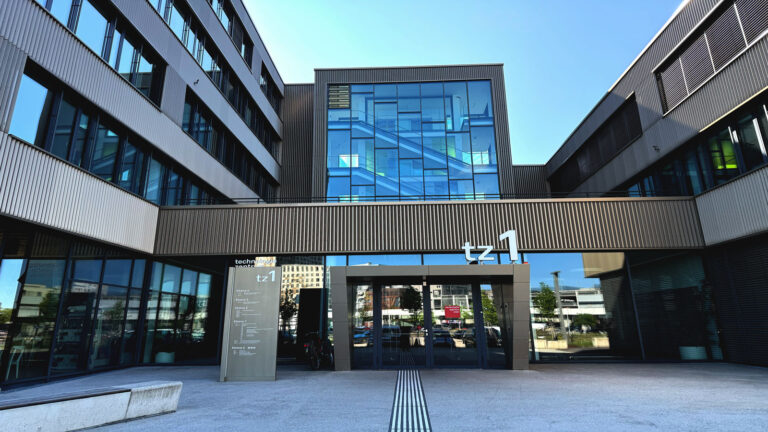
Oder besuchen Sie uns im Showroom und testen Sie das Modul vor Ort