

Exposure-based procedures are among the most effective psychotherapeutic interventions. At the same time, everyday clinical practice shows that exposure in sensu or in vivo is not used often enough. Depending on the complexity of the target stimuli, implementation involves considerable organizational effort. Some situations cannot be represented in vivo at all, or only with great time expenditure and, ultimately, financial cost. It is precisely at this point that we began, in an inpatient psychiatric setting, to systematically integrate exposure using virtual reality (Virtual Reality Exposure Therapy, VRET) into our psychotherapeutic services.
Virtual reality opens up an additional therapeutic experiential space that allows emotionally relevant stimuli to be experienced in a realistic, controllable, and therapeutically supported way. In practice, we use the system across disorders whenever the therapeutic team considers exposure to be clinically appropriate—especially when classical formats (imaginal exercises, role plays, etc.) do not work sufficiently or are difficult to implement in practice. With this additional exposure modality, we have also been able to overcome limitations arising from the treatment setting itself, for example when patients are accommodated on the ward or when leaving the unit is (temporarily) not possible.
VRET was initially established in our clinic to be able to carry out exposure for anxiety disorders in a more targeted and more frequent way. The variety of virtual scenarios allows for a wide range of exposure stimuli (e.g., height, confinement, public spaces, crowds, interaction, and evaluation), which can be finely graded in intensity, duration, and complexity. This makes it possible to tailor exposure very precisely to the current level of distress, even in severely chronic anxiety disorders. In our experience, VRET often serves as a springboard to in vivo exposure: patients can first have corrective experiences in a highly controllable environment and then gradually manage the transfer to real-life situations.
The system has proven particularly effective not only for specific phobias but also for social anxiety and interactional situations. For example, evaluation situations, group conversations, or targeted experiences of rejection can be made far more tangible within virtual reality than in traditional role plays. The immersive quality leads to immediate bodily activation, automatic thoughts, and action impulses, which can then be therapeutically addressed in real time. Especially for patients who “stay in their heads” during conventional role plays, VRET can help move from mere discussion to actual experience.
With the establishment of virtual reality exposure for anxiety disorders, we expanded its use to substance use disorders as another key field of application. In the treatment of substance use disorders, it is often the case that therapists are not present at the decisive moments—namely when craving arises and the course is set toward relapse or abstinence. Virtual reality makes it possible to deliberately elicit craving while being therapeutically present at the same time. In virtual scenarios such as a bar, a living room, or a party, patients experience craving at an intensity close to real life, yet without the real risk of an immediate relapse.
Within these exposure situations, strategies for emotion and impulse regulation can be developed together and tried out directly: for example, labeling and “surfing” craving, attentional redirection, breathing and body focus, self-instructions, dealing with permission-giving thoughts, and rehearsing alternative action plans. At this moment, the patient is not alone with the craving but accompanied. This makes observable in the here and now what is often only reported retrospectively in therapy: Which thoughts arise? Which bodily reactions increase? Which triggers are particularly influential? And what actually helps to interrupt the impulse?
In substance use disorders, comorbid anxiety disorders or social insecurities are common and can maintain or intensify craving. Virtual reality makes it possible to specifically address these fears within exposure, such as social situations in which rejection is feared or contexts in which shame and self-devaluation make substance use attractive as a short-term relief strategy. Here in particular, rejection training can become much more tangible: patients can experience that unpleasant social emotions rise and fall again without consumption being “necessary,” and that new, more self-confident ways of responding are possible.
Another important experience from our inpatient practice is that VRET has proven useful not only for “milder” disorders but especially in an inpatient psychiatric setting with severely ill patients. We often treat patients with pronounced comorbidities, long histories of illness, multiple previous treatments, and repeated inpatient stays. Not infrequently, several psychopathological syndromes coexist, coupled with increased vulnerability to crises up to and including suicidality. Our experience is that VRET can also be used effectively in these complex constellations—precisely because exposures can be carefully dosed, closely accompanied, and prepared and processed immediately within the inpatient setting. For some patients, it is a decisive advantage that exposure becomes realistically feasible at all despite severe symptom burden and does not have to be postponed to a “later time.”
After more than two years, we regard exposure using virtual reality as a valuable therapeutic tool within our overall treatment concept, one that arouses curiosity and interest among both patients and therapists and often leads to immediate experiences of success. Even though virtual exposure is, at its core, the familiar exposure-based approach implemented through a different medium, specific therapeutic requirements emerge in practical application. The immersive quality of virtual reality, the intensity of the experience, and the flexible design of different scenarios require targeted training of therapists.

Isabella Mehling is a licensed psychological psychotherapist specializing in cognitive-behavioral approaches. She has many years of experience in inpatient psychiatric care and works across disorders in various clinical focus areas. In addition, she is also in private practice and combines inpatient care with outpatient psychotherapeutic work. Her work includes the treatment of complex disorders, particularly in the areas of anxiety, addiction, and psychotic disorders. A special focus lies on integrating innovative, evidence-based therapy formats into existing clinical treatment concepts. Alongside her clinical work, she is involved in the conceptual development of psychotherapeutic services as well as in training and continuing education.

No results found.
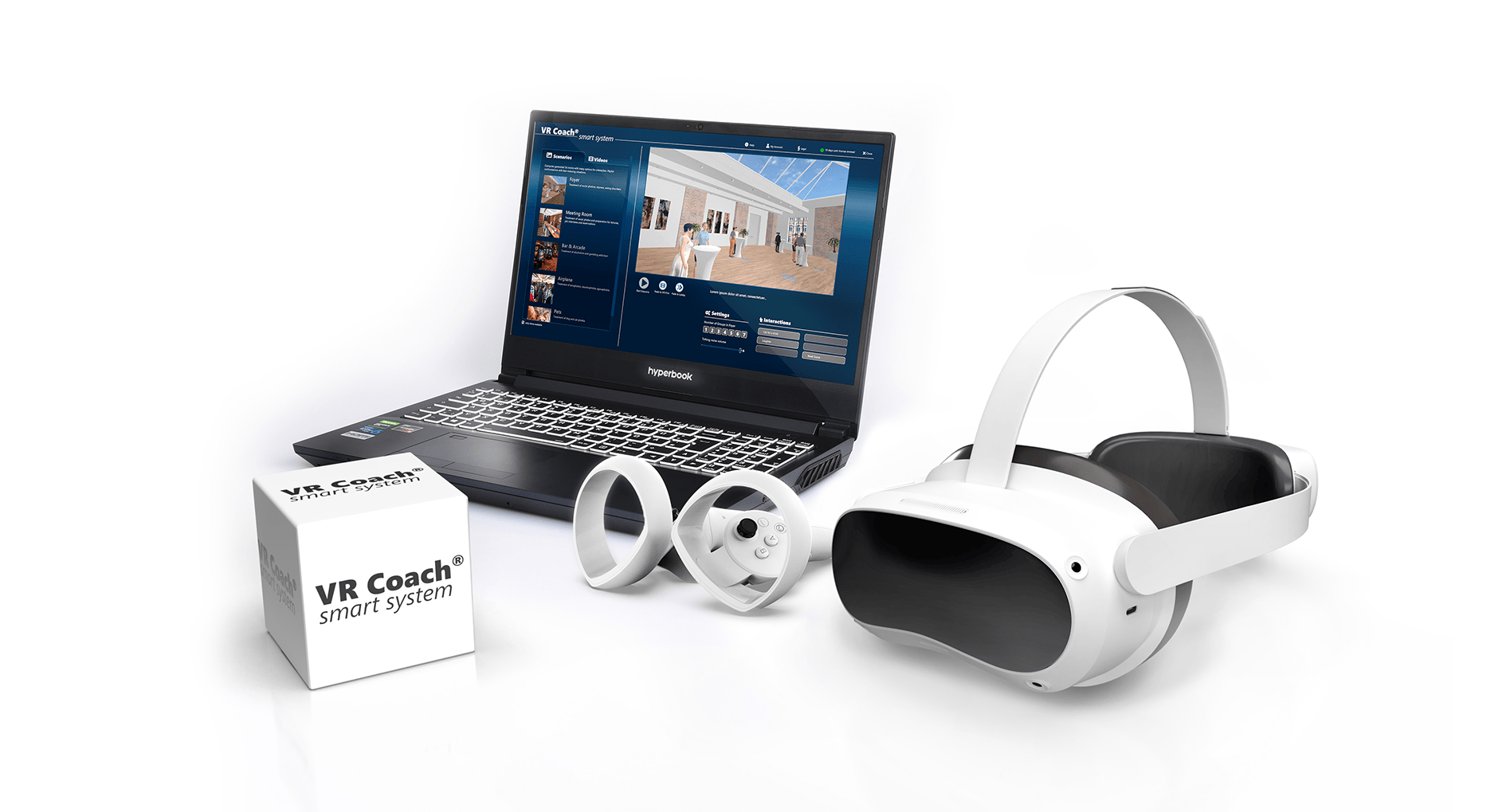
Our users consistently confirm the very high quality and realism of the 3D graphics. Unfortunately, this quality cannot be fully conveyed through simple images on the website.
The screenshots shown are intended only to illustrate and demonstrate the content.


Wir nehmen demnächst mit Ihnen Kontakt auf.
Ihr VR Coach-Team
We will be happy to get in touch with you soon!
Your VR Coach team
Would you also like to test our content for depressions, eating disorders and compulsions free of charge?


