


What is Virtual Reality Therapy?
In virtual reality therapy (VR therapy), patients use a VR headset to experience simulated environments designed to trigger anxiety or cravings. These include scenarios such as a spider crawling on a table or giving a speech in front of a virtual audience.
This approach allows patients to learn how to cope with difficult situations through controlled exposure – an effective method for treating anxiety, addiction, and OCD.
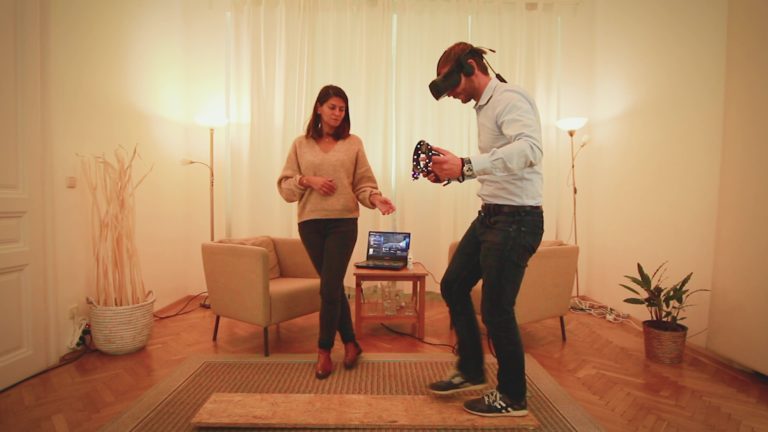
Therapist-guided exposure in real time
Therapists remain involved throughout the session and can use a desktop control app to adjust the exposure intensity – for example, by changing the size or number of spiders or the audience’s reactions.
Every scenario is interactive and customizable, ensuring safety and control.
Proven effectiveness of VR therapy
Numerous studies from Germany and internationally show that VR therapy achieves treatment success comparable to that of classic in vivo therapy, but has fewer treatment discontinuations and requires less organisational effort.
- Fast implementation in clinical settings
- Emotionally realistic yet safe experience
- Fewer dropouts → higher therapy success
- Multiple exposures within the therapy room
- Therapist control over scenario intensity
- Time consuming and costly
- More therapy discontinuations
VR Coach® smart system: Next-level therapy made simple
What once required complicated equipment is now easy to implement with the VR Coach® smart system – in clinics or private practices.
Benefits for your practice:
Modern therapy to attract new patients
Expanded treatment offerings
Stand out from other providers
Appealing to new professionals
Easy to use and ready to deploy